Inside the World of Competitive Thumb Wrestling Leagues
What started as a schoolyard time-killer has, in certain obsessive circles, become a surprisingly serious athletic pursuit.
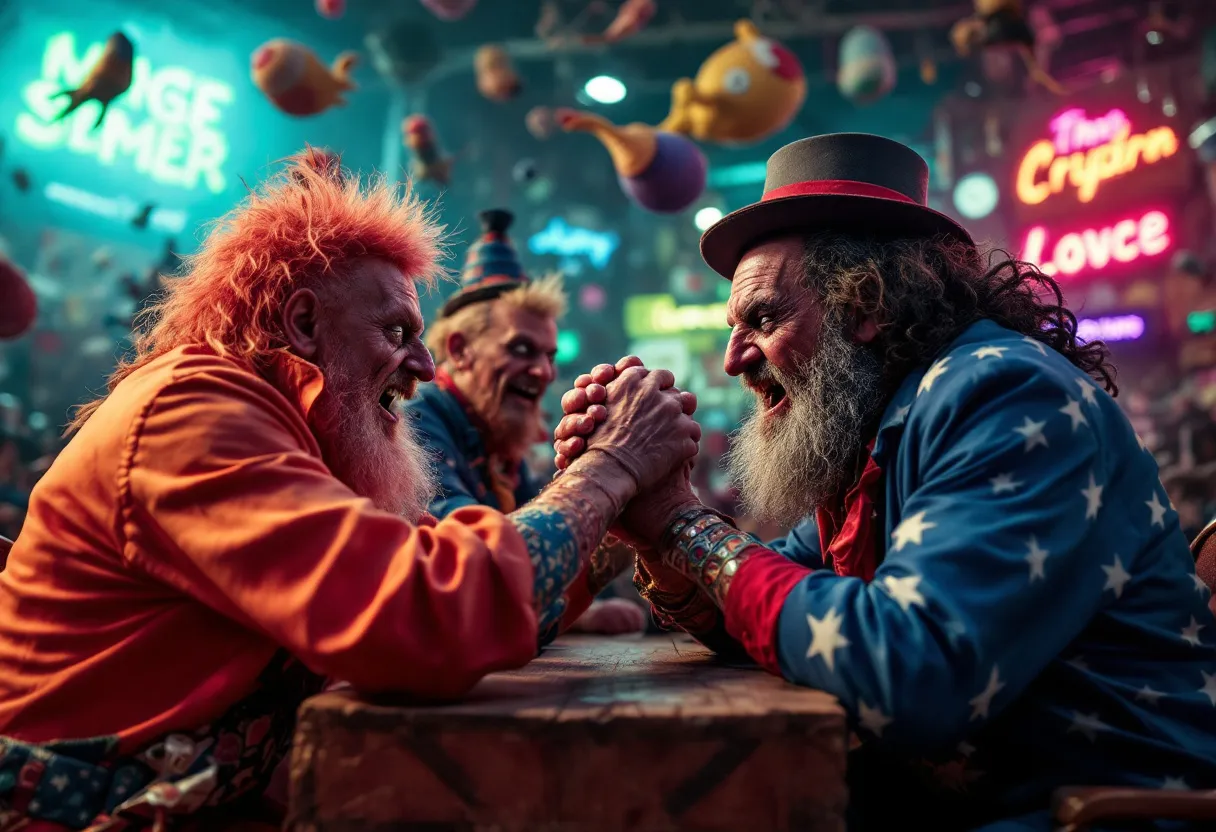
The thumb wrestle is perhaps the most egalitarian competition ever devised. No equipment, no field, no referee strictly required. You need exactly two people and a combined total of two thumbs. And yet, if you find yourself in the right corner of the internet, you will discover that some people have taken this to a place nobody's parents could have predicted.
Organized thumb wrestling leagues exist, and they are not joking around. Participants debate optimal thumb conditioning, grip psychology, the biomechanical advantage of a longer proximal phalanx. There are handshake protocols, warm-up routines, and passionate disagreements about whether moisturizing before a bout constitutes a performance-enhancing edge. The community is small but has the particular intensity of any group that has chosen a niche and committed to it completely.
A History in the Palm of Your Hand
Thumb wrestling's origins are genuinely murky, which is itself part of the charm. It appears across cultures in various forms, suggesting either parallel invention or an ancient, poorly documented tradition. The standard "one, two, three, four, I declare a thumb war" chant varies by country, by region, sometimes by school district, in ways that feel almost dialectal.
What the competitive community has done is impose structure on this beautiful anarchy. Standardized arenas, interlocked fingers forming a ring, are policed for symmetry. Matches are timed. Some leagues have introduced weight classes based on hand size, a decision that generated considerable philosophical debate about whether this violated the sport's essentially democratic spirit.
The Internet Made Them Find Each Other
Like so many wonderfully specific subcultures, organized thumb wrestling owes its current form to the internet's matchmaking powers. Forums, then subreddits, then Discord servers connected people who had each independently concluded that this thing deserved to be taken more seriously. Video tutorials appeared. Slow-motion analysis of championship bouts became a genre.
Critically, the community retains a knowing humor about itself. Nobody is pretending this is the Olympics. The jokes are part of the culture, a self-awareness that makes the simultaneous genuine passion for technique and competition even more endearing.
If you think you could take any of these people in a bout, they would very much like you to say that to their face.
More stories
The People Who Train Themselves to Hear Color
A small but dedicated community is using sensory substitution techniques to experience the world through entirely new perceptual channels.

The Future of B2B Prospecting: Five Shifts Already Underway