Dumb Phones Are Having a Very Smart Moment
A growing number of people are voluntarily downgrading their handsets, and the reasons go well beyond nostalgia.
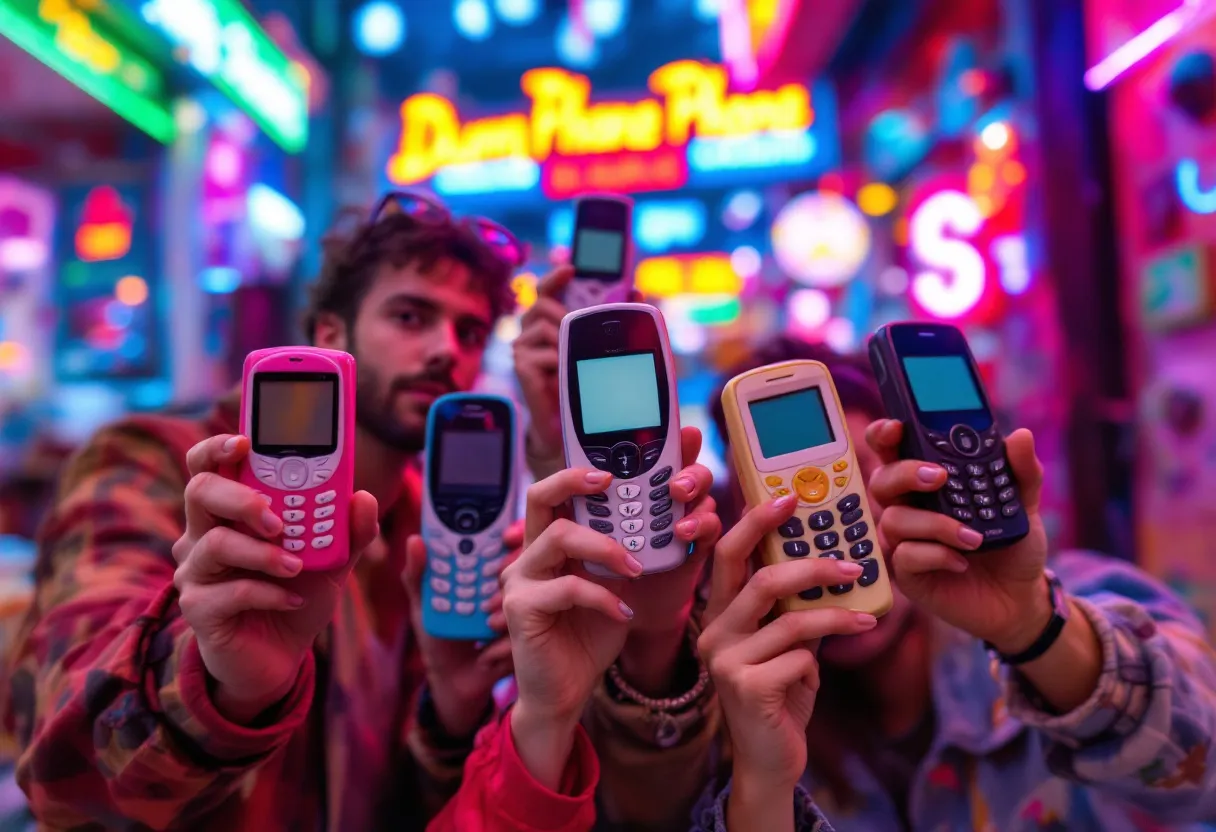
The pitch sounds like a joke: give up your supercomputer pocket device and replace it with something that can call people, send texts, and do almost nothing else. No apps, no feed, no notifications shaped like tiny dopamine levers. And yet sales of so-called dumb phones, basic handsets, light phones, and feature phones positioned as intentional downgrades, have been climbing steadily enough that the movement deserves to be taken seriously.
This is not, for the most part, a technophobe's crusade. The people most visibly adopting stripped-down handsets tend to be thoroughly online, acutely aware of how the attention economy works, and specifically choosing to opt out of one slice of it. They are not rejecting technology; they are practicing a fairly sophisticated critique of a particular flavor of it.
The Notification as Design Choice
The conversation around dumb phones is inseparable from the broader reckoning with how smartphones were designed. The features that make them so useful, constant connectivity, infinite content, social feedback loops, are also the features that make them feel, to a lot of users, like something that is happening to them rather than something they control.
Downgrading is, in this framing, a form of negotiating back some agency. It is blunter than digital wellness apps or screen time settings, which have the peculiar quality of being smartphone features designed to reduce smartphone use. A dumb phone simply cannot show you the thing you were trying not to look at.
What You Actually Give Up
The practical friction is real and worth taking seriously. Navigation without maps. No mobile boarding passes. The WhatsApp groups that constitute, for many people, genuine social infrastructure. Dumb phone adopters tend to solve these problems in ways that reveal how many smartphone functions can actually be handled by a laptop or tablet when you are not in the specific panic of being out somewhere with nothing else.
The more interesting question is what the trend reveals about the smartphone's cultural moment. The devices are not going anywhere. But the fact that opting out is increasingly readable as a coherent lifestyle choice, rather than eccentricity or poverty, suggests the consensus around constant connectivity has quietly cracked.
Somewhere, a feature phone is ringing. Someone is actually going to answer it.
More stories

The Aesthetics of Nowhere: How Liminal Spaces Took Over Visual Culture
Empty swimming pools, deserted airports, and fluorescent-lit hallways at 3am have become the defining images of a generation's ambient dread.

The Future of B2B Prospecting: Five Shifts Already Underway